For queer creators, the digital landscape is a double-edged sword. On one hand, it offers unprecedented opportunities for financial independence, self-expression, and community building. On the other, it presents unique, disproportionate risks from targeted harassment and algorithmic bias to doxxing and content leaks.
At Rulta, we believe that true digital safety means having absolute agency over your own content and identity. To celebrate Pride Month, we wanted to step back and pass the microphone to the creators who navigate these complex waters every single day.
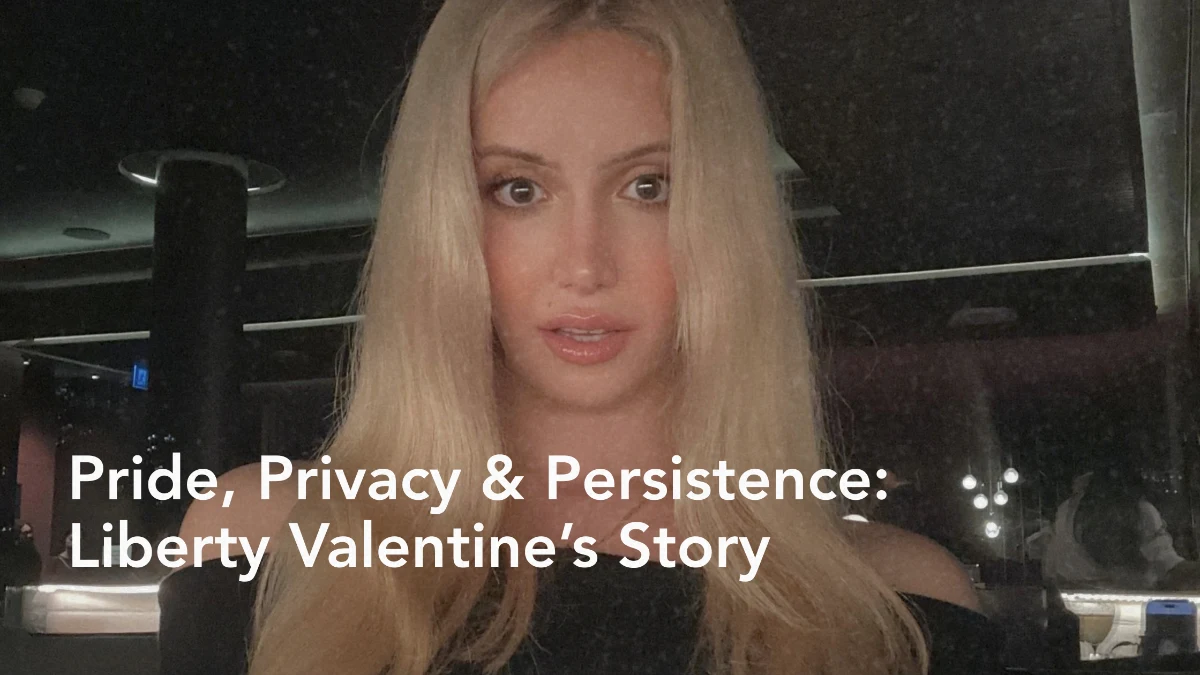
We spoke with Liberty Valentine, a trans creator who shared her candid experiences on visibility, the frustration of automated moderation, and what it really means to feel protected online.
The Reality of Online Visibility
While Liberty notes that much of her day-to-day experience now mirrors the general challenges of being a woman online, the reality of existing as a visible trans creator comes with distinct hurdles. The internet’s shield of anonymity often emboldens hostility that wouldn't happen in the real world.
"One thing that surprised me as I became more visible online was realizing how much hostility still exists toward trans people... Online, people have that anonymity. I’ve received death threats and I’ve had people try to dig up personal information about me or threaten to dox me. The goal is often to make you feel vulnerable or intimidated."
Despite these aggressive tactics, Liberty has mastered the art of resilience. Rather than retreating, she uses the friction to her advantage.
"Being a creator teaches you how to develop a thick skin. In some cases, I’ve even been able to turn the attention into engagement and visibility, using the conversation around my content to reach a wider audience and continue growing my platform."
The Unintended Educational Role
A common, yet rarely discussed, phenomenon for queer creators is the assumption that their presence is inherently educational. Simply existing online often drafts trans creators into a role they didn't explicitly sign up for.
"Even when you don’t set out to teach or explain anything, a lot of your content ends up being pushed in that direction. You find yourself repeatedly clarifying misconceptions, answering the same questions, or providing context that many people simply haven’t been exposed to before. It becomes part of the job almost by default, rather than by choice."
The Algorithm vs. Queer Creators
One of the most systemic issues facing the LGBTQ+ creator community is the flawed nature of platform moderation. Automated systems frequently misinterpret trans bodies and discussions, resulting in unfair penalties that threaten a creator's livelihood.
"In my experience, discussions around trans topics can sometimes get incorrectly flagged as sexual or inappropriate by automated systems, even when they’re not. What makes it even more frustrating is how difficult it can be to get meaningful support... It can be incredibly hard to reach an actual human being who can review the situation and make a fair decision."
Having to rebuild audiences multiple times due to account bans is a harsh reality, but Liberty emphasizes that it teaches a vital business skill: adaptability and platform diversification.
Redefining "Digital Safety"
When discussions arise about creator safety, they often miss the core issue: Agency. For Liberty, true protection isn't just about avoiding hate comments; it's about retaining control over her work and her identity.
This loss of control can sometimes come from unexpectedly close sources. Liberty notes that having content leaked by people from everyday life feels incredibly invasive, as it directly strips away a creator's power to decide how and where their work is distributed.
Furthermore, identity theft remains a massive burden placed unfairly on the creators themselves.
"I’ve been impersonated quite a lot, and people have used my content to try to scam my followers... It makes me feel responsible for making sure people can distinguish the real me from fake accounts, which shouldn’t have to fall entirely on the creator. True protection online means platforms taking impersonation seriously and removing fake accounts quickly."
Advice for the Next Generation of Queer Creators
Despite the challenges, Liberty remains highly optimistic about the creator economy for queer individuals, offering practical, business-minded advice for those just starting out.
"There’s a lot of opportunity in this space, especially as a trans creator. We often bring a unique perspective, and there are people out there who genuinely want to see and support creators who offer something different."
Her final piece of advice is a reality check for anyone entering the industry:
“Treat it like a business”
"The harder you work, the more you’ll generally get out of it. This industry can provide an incredible amount of financial freedom."
“Understand the internet's permanence”
"Once something is online, there is always a chance that it can spread beyond where you originally intended it to be... It’s important to understand that before you start."
“Keep your eyes on the goal”
"Not everyone is going to support you, and not everyone is going to be kind... Don’t let the hate distract you from your goals."
Pride is about being seen, but being visible online should never mean feeling unsafe. Liberty’s journey is a powerful reminder of the resilience required to thrive as a queer creator today. At Rulta, we stand with creators like Liberty, because protecting your content means protecting your right to exist, create, and succeed on your own terms.
Happy Pride!
